EV charging downtime
Peter McDonald questions if fleets have thought how their cars or vans might be charged for the majority of the time?

Martyn Collins

For many fleet managers, the transition towards electric vehicles begins and ends with the purchase of the vehicle itself. Not much thought is given over to how those cars or vans might be charged for the majority of the time, whether it’s at home or at a public charger or a combination of the two.
In my previous column, I outlined the savings that could be made for a typical EV driver when charging at home compared to running an ICE vehicle, but not much is talked about the vast differences in charging costs for EV drivers.
When you think about the largest price differentiation for the price of petrol or diesel per litre, say between a motorway services and a supermarket filling station, it might seem large but it might be 10-15%. By comparison, the difference in the cost of electricity could be far, far greater for an EV driver.
A typical ultra-rapid public charger could be 90p/kWh or more at peak times when using a pay-as-you-go rate (as opposed to having an account or specific app). Charging at off-peak times or at slower public chargers are slightly more affordable at around 45-55p/kWh, but most business drivers don’t have the luxury of either choosing when or where they charge.
Charging at home will always be the cheapest place to charge even at the current standard rate of electricity, 26.11p/kWh. If a driver chooses to go onto a smart tariff at home, that rate could be reduced to as low as 8p/kWh during off peak times. As I outlined in my previous column, the savings could be considerable and easily cover the cost of a charger for a fleet within a year.
However, while that is the obvious on-paper saving, it’s perhaps more important to examine the off-paper savings of providing employees with home chargers as well.
Imagine two different employees, both of whom regular cover a reasonable amount of miles in their EV company cars on continuous days. The first driver doesn’t have home charging. They start off their day perhaps with 80% of charge in their car from a late charge the previous day (charging above 80% can be time consuming at a public charger as the speed slows considerably). They have a couple of meetings in the morning and they need to find a charger to charge up over lunch to minimise their downtime.

Except the chargers they’d planned to use are busy, so they don’t get as much time to charge as they thought, so their lunch break is cut short and they’re late for their first afternoon meeting. Finally it’s time to head home. Except they’re now on 20% or less and need a quick charge for their journey back before they stop again closer to home for a longer charge, again taking more time out of their day. Once more, they only charge to 80% once more as it’s already past their official hours and they’re tired.
Now imagine the same driver with a home charger. They leave home with a full charge as their EV was topped up overnight on a cheaper smart tariff. Because they start with a full charge, they don’t need to top up at lunchtime or spend the time looking or waiting for a free charger.
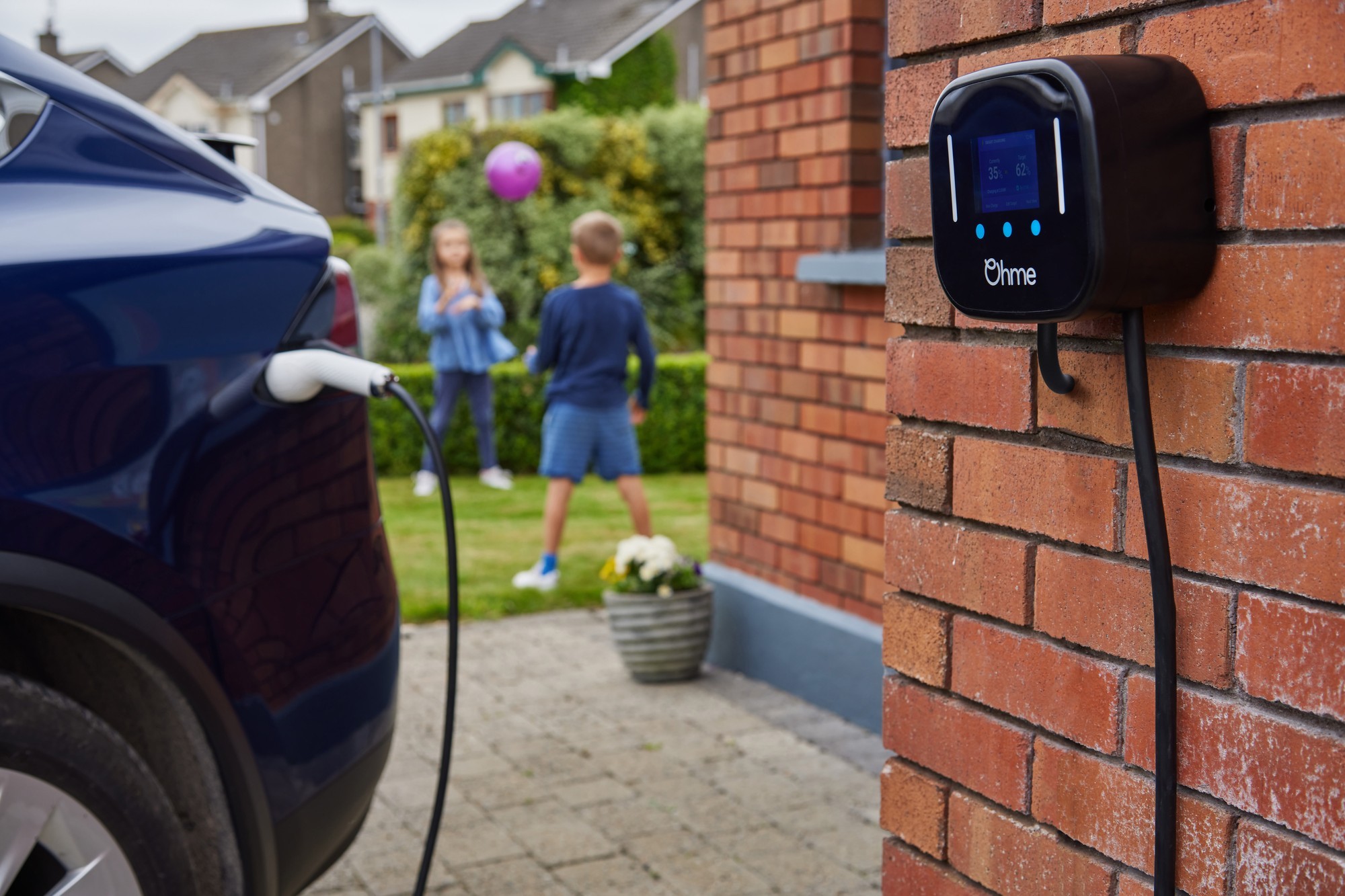
Furthermore, because they also don’t need to charge before they get home, they are on time for their usual meetings and also have another extra meeting that got booked in at the last minute and they were able to accommodate. They get back home at the end of the day with 5% charge showing, but it doesn’t matter. They set their Ohme EV charger for a full charge for first thing the next morning and the Ohme tech provides them with the cheapest possible charge within their home energy tariff. The next morning that driver will start again with a 100% charge.
It’s a pretty easy comparison. The second example is considerably more efficient with their time. Not only is there the obvious reason that they start their day with 100% and can end it on close to zero, but they can also limit their time with public chargers as well. Not just charging at them, but also looking for available ones both during their working day and at the end of it – saving both time and cost of public charging. If they can get one additional meeting in per day as a result, that’s potentially five additional meetings a week.
For anyone doing site visits or just with essential meetings, there’s little question about which is preferable. For the employee, it’s a lot less hassle and a lot less stress, during the day when searching or waiting for available chargers. For the employer or fleet manager, there might be the up-front cost of the home chargers, but that is quickly returned with the savings from the charging itself.
And, as we said at the start, that’s before you’ve even got to the far greater savings outlined here on employee time and efficiency. Those off-paper savings will be far greater and arguably more important to your company as a whole, than any of those charging savings will ever be. For most companies, their biggest cost is their employees and so maximising their time mean those same employees can also see your biggest savings.
Share this
Featured Posts


Explore Topics