Polestar 3 Review
There’s a new version of the Polestar 3, and all the changes are under the skin.

Martyn Collins

Polestar might have just revealed an ‘SUV’ version of the Polestar 4, but the other big product news this year, is the release of updated versions of its range-topping Polestar 3.
Looking to find changes to the 3’s attractive, elongated, coupe-like lines? Well, you’ll be looking a long time, as there are none! It’s the same with the interior – so where are the changes, and why a revised version?
Well, the Polestar 3 shares Volvo’s SPA2 platform with the Volvo EX90. Both models were sadly afflicted by issues affecting this platform, resulting in a two-year gap between debut and introduction. Now, two years after its UK debut, Polestar is using this update to make this car as it should have been at launch.
The biggest change is the move from 400-volt architecture to the more common 800V set-up. As a result, the Polestar 3’s maximum DC charging speed increases from 250kW to 350kW, while real-world rapid charging times have dropped by 25%.
Elsewhere, all Polestar 3 models get new batteries and more powerful motors, which were developed in-house. The simplified trim structure is now dictated by the powertrain.
Performance and drive
The longest-range Polestar 3 was the ‘Long Range Single Motor’. It’s now called the ‘Rear Motor’, and it’s now fitted with a smaller 92kWh battery, with the longest range at 374 miles – but that’s a significant drop from the 438 miles Polestar claimed previously. Still, power is up from 295hp to a not-insignificant 329hp, with 0-62mph acceleration dropping as a result to 6.3 seconds.
Then there’s the Dual Motor version, which is expected to be the most popular version – and the car we’re testing here. Like the ‘Rear Motor’, this Polestar 3 uses a smaller battery (now 106kWh, down from 111kWh), although the range increases marginally from 395 to 404 miles. Power is up from 482hp to 536hp, with 0-60mph acceleration falling from 4.8 to 4.5 seconds.
Buyers wanting even more can choose the ‘Performance’ model, which is basically the Dual Motor with what was previously called the optional ‘Performance Pack’. It should live up to its name, with power jumping from 517hp to a frankly unbelievable 680hp. As a result, acceleration drops from 4.5 to just 3.8 seconds.
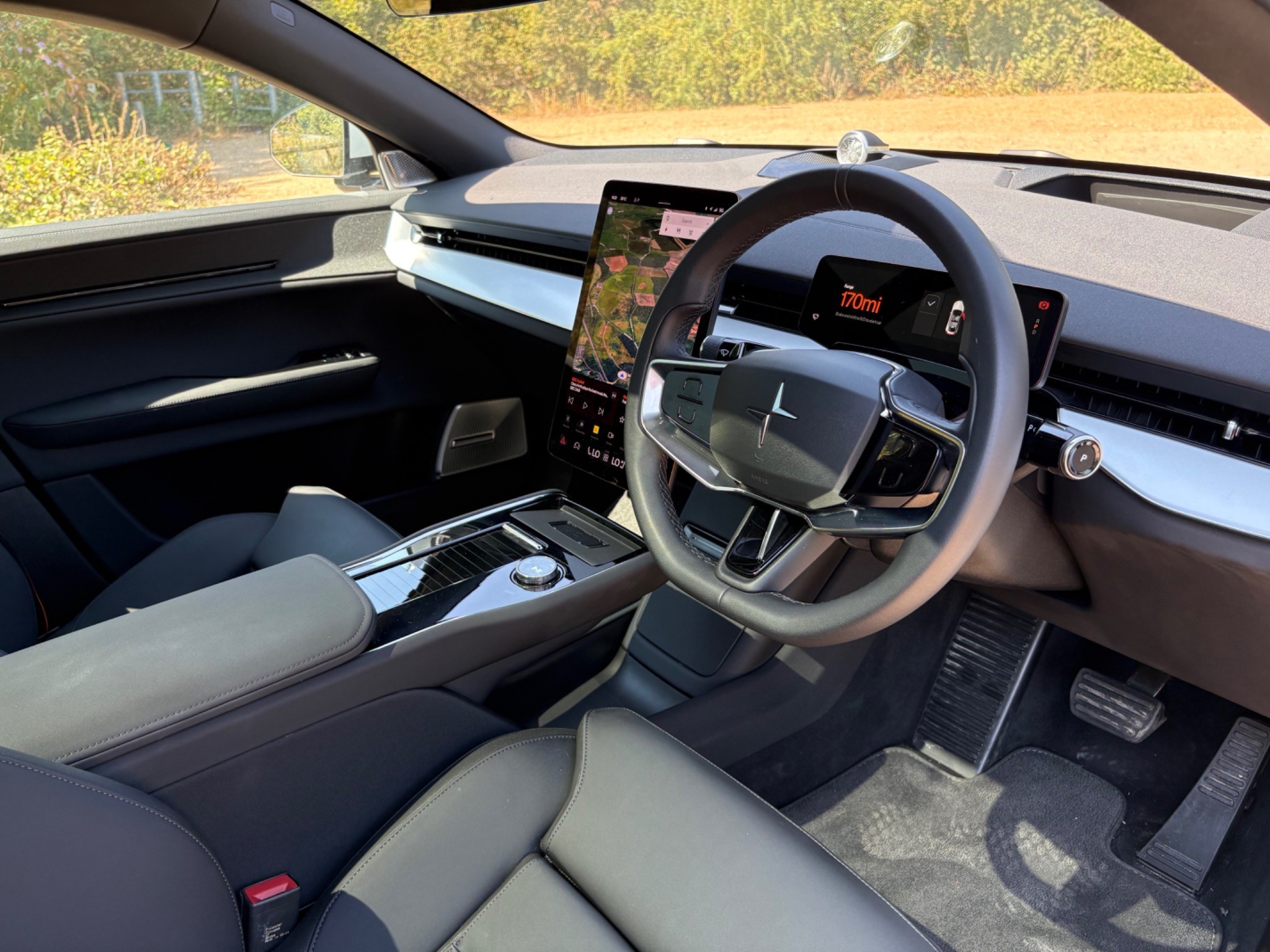
Standard air suspension means that despite the optional 22in wheels fitted to our Dual Motor car, the ride remains impressively supple. However, on smaller, more undulating roads, just like the previous Polestar 3s that we’ve driven, it can occasionally feel floaty.
At over 2.5 tonnes, this Polestar is as heavy as you’d expect an EV to be. The twin-motor version has always had a rear-drive bias, but tweaked steering and damping equal an even sharper and more involving drive.
With over 500hp, it’s hard to tell any differences in performance. Let’s just say that there’s more than enough for UK roads!
Design and interior
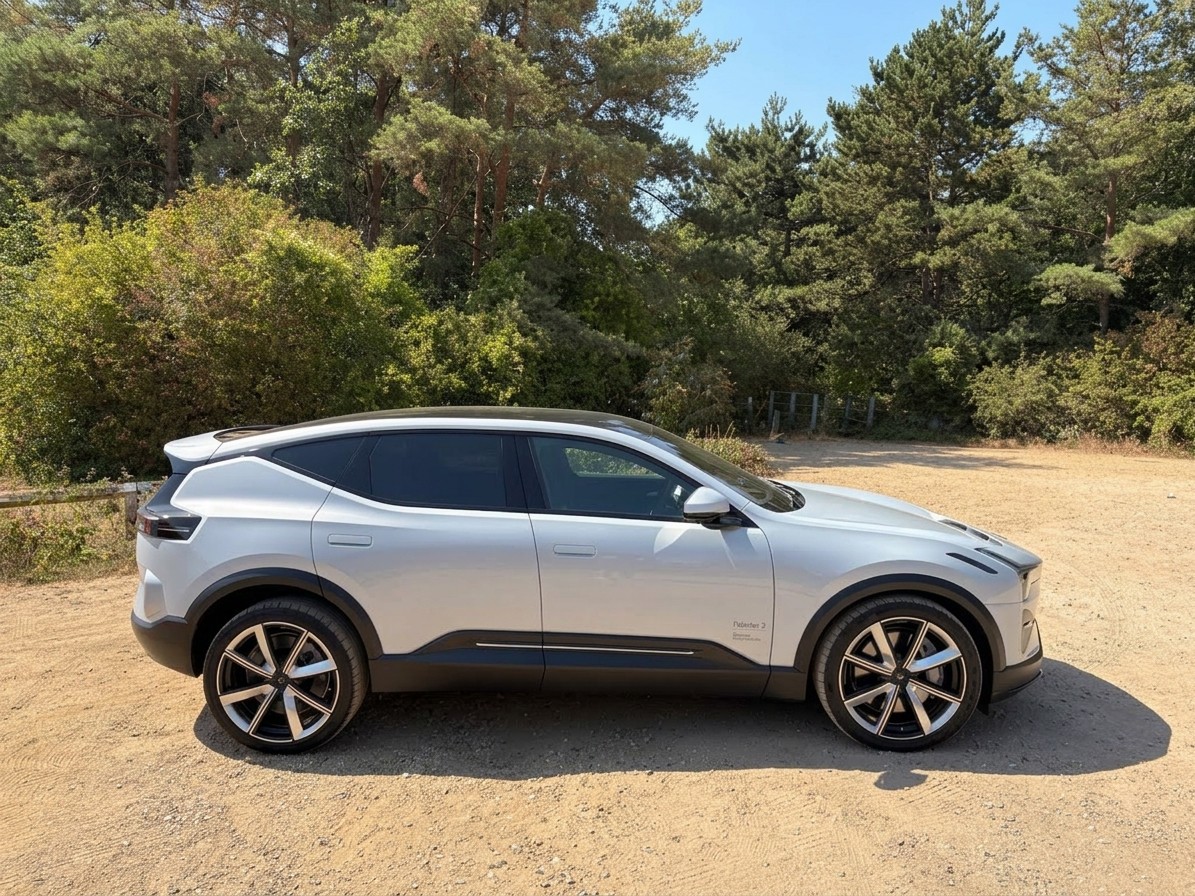
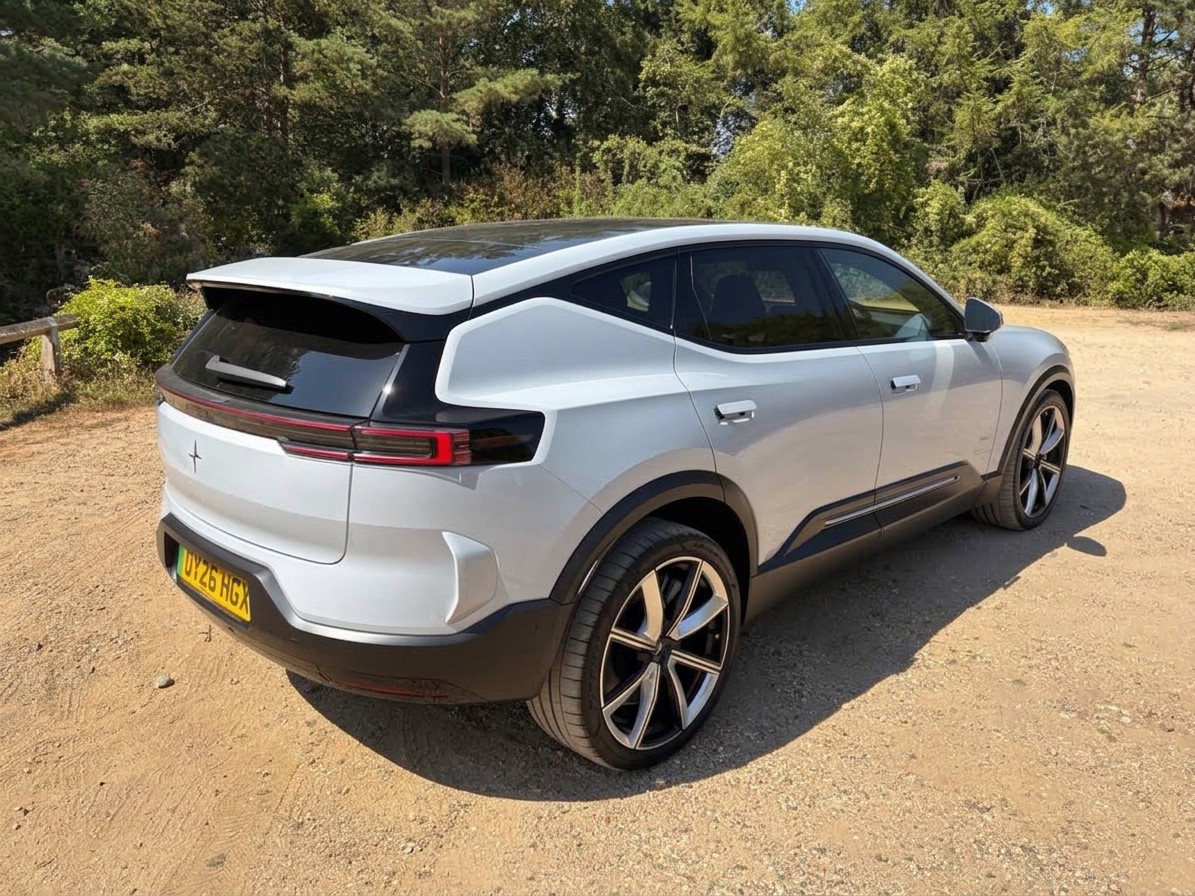
With its coupe-like roofline, the Polestar 3 looks lower and shorter – and more attractive! – than the figures suggest. Other design highlights include the split headlights, the front grille that funnels air up the bonnet, plus the lower cut-outs down the sides and the unusual rear light design.
The mixture of high-end finishes, along with the modern design, makes the Polestar 3 as attractive on the inside as the outside. We’ve talked about the low roofline from the outside, but when you’re inside, it has the effect of making the ‘3’ feel more like a big estate than an SUV. However, headroom never feels like an issue, and the glass roof lets plenty of light in.
The Polestar’s leather-trimmed sports seats must be shared with the Volvo, as they’re both comfortable and supportive. Highlights of the simple, horizontal dashboard design include the vertical 14.5in infotainment screen and the smaller 9in screen in front of the driver.
It is just a shame that drivers will be so reliant on the infotainment screen to make changes to this car, as so many features are hidden in too many menus, like many other modern electric cars.
It is spacious in the back of this Polestar, too. Although, we still find that rear passengers are sitting quite high, with knees almost too elevated! Overall, this Polestar’s fit and finish feels as good as it should, considering the test car’s £88,000+ price.
We’ve tried it out before, but the standout option on this press car was the incredible 1,610-watt, 25-speaker Bowers & Wilkins sound system, which is part of a very full optional ‘Plus Pack’. There is also a generally practical 484-litre boot, although that curvy rear window limits some of its usefulness.
The Single Motor version with the longest range, at the most affordable price, will, in our opinion, be the most sensible fleet choice. But we wouldn’t blame those who are able to step up to the Dual Motor version.
Whatever version of the Polestar 3 you choose, in our opinion, it’s one of the best electric SUVs on sale. The Single Motor version is likely to have the longest range and, as such, will be more suitable for fleets.
Positive: Increased range, keener drive, attractive interior and exterior styling.
Negative: Driver’s will be too reliant on the infotainment, boot could be larger, sometimes feels a bit big on small roads.
Standard equipment: LED headlights, panoramic glass roof, Bio-attributed WeaveTech upholstery, sports comfort front seats, heated front seats, comfort rear seats, three-zone electronic climate control, touch-sensitive multi-function steering wheel, 9in driver display, 14.5in infotainment screen, 300-watt 10-speaker audio system.
Polestar 3 Dual Motor 106kWh
P11D | £89,140 |
|---|---|
Range | 404 miles |
CO₂ (BiK) | 0g/km (4%) |
BiK 20% / 40% a month | £59 / £119 |
Luggage capacity | 440 litres |
Battery / Power | 106kWh / 536hp |
Share this
Featured Posts


Explore Topics